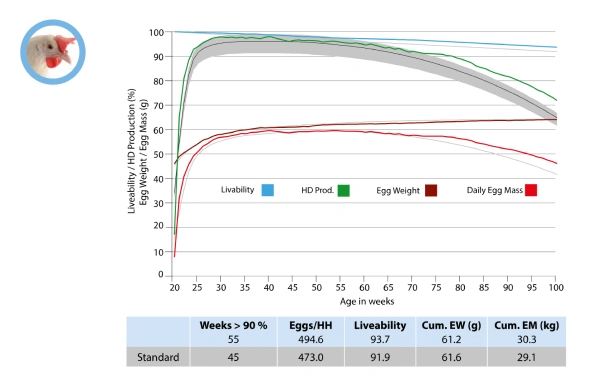
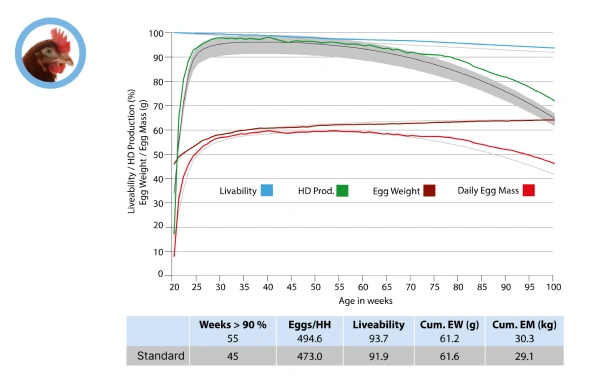
After reaching a good production peak, H&N hens should enter a production plateau. Their genetic potential allows them to maintain a high production level and good eggshell quality for some weeks but to achieve this, pay close attention to certain aspects:
Feed quality
Daily intake
Absence of diseases
Body weight
Production Monitoring
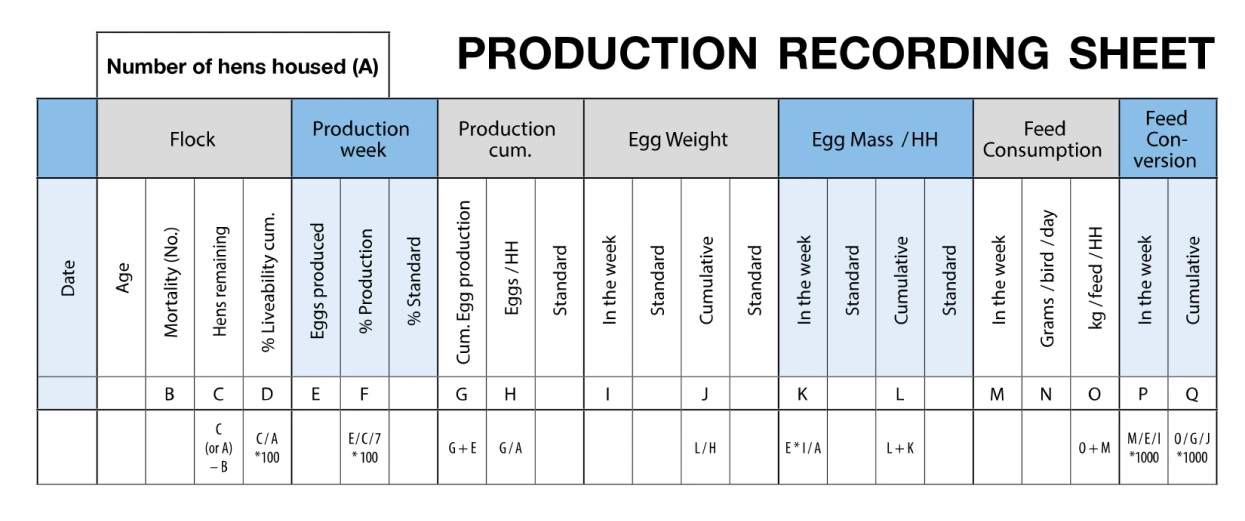
Detailed laying cycle records are necessary to evaluate performance and profitability. Daily figures for hen-day production, egg weight, feed and water consumption and mortality are necessary.
This information will allow you to calculate very important data including daily egg mass, cumulative egg mass and feed conversion. All results should be presented in graphs. Use of graphs will improve analyses of flock performance trends.
Growth records, accurate cage and / or pen counts are also very important. This enables timely intervention in response to any irregularities and generates historical data for more in-depth analysis of production performance.
Feather Covering
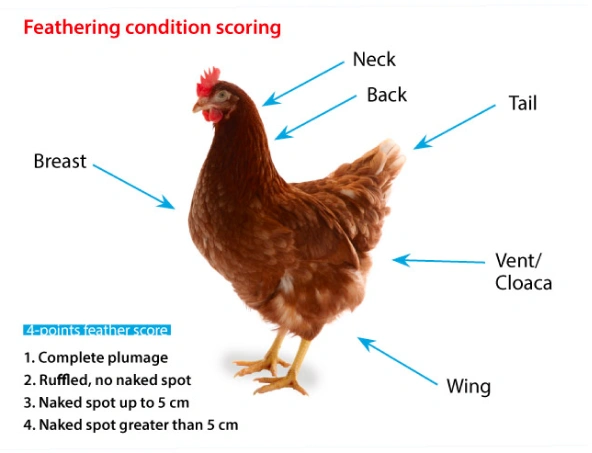
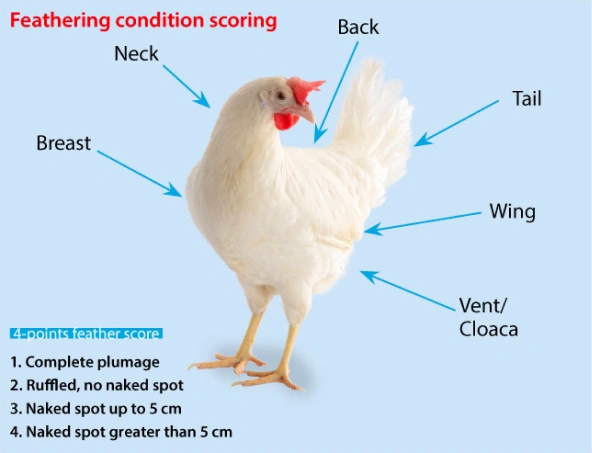
Feather coverage is a key indicator of the hen’s body condition. If hens lose their feathers, their thermal insulation capacity will remain seriously impaired. This impacts directly on feed intake and maintenance energy needs. It therefore means an increase in the production feed costs. Poor feathering can also be caused by stress or pecking. The condition of the feathers is also a sign that indicates stress or deficiencies.
Excessive feather loss can be due to various factors including:
Poor nutrition Pecking or social aggression
High stocking density
Poor feed distribution
Harsh housing conditions
Monitoring feathering can help signal potential problems caused by aggression, nutritional deficiencies or other problems.
Aggression
Occasionally, aggression and cannibalism can occur in the flock. This can affect hen welfare and their production performance. Behaviour-related issues can have multiple causes, but certain management practices can be applied to help prevent aggression and cannibalism:
Control light intensity and reduce it after production peak
Correct rations, especially amino acids, sodium and fiber content.
Correct beak treatment – if permitted in your country.
Stress avoidance (noises, direct sun rays, light intensity variation, etc.).
Enrich the hens’ environment.
Feeding layers during production
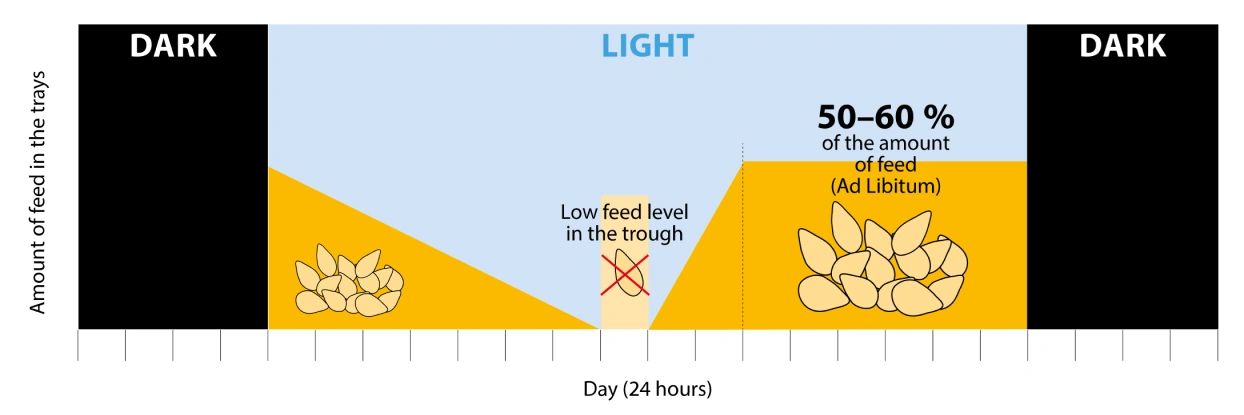
Layers do not consume equal amounts of feed during the whole day. 70 % of feed consumption occurs in the early hours of the morning and the last four hours in the afternoon. They also have a predilection for calcium during the last hours of light.
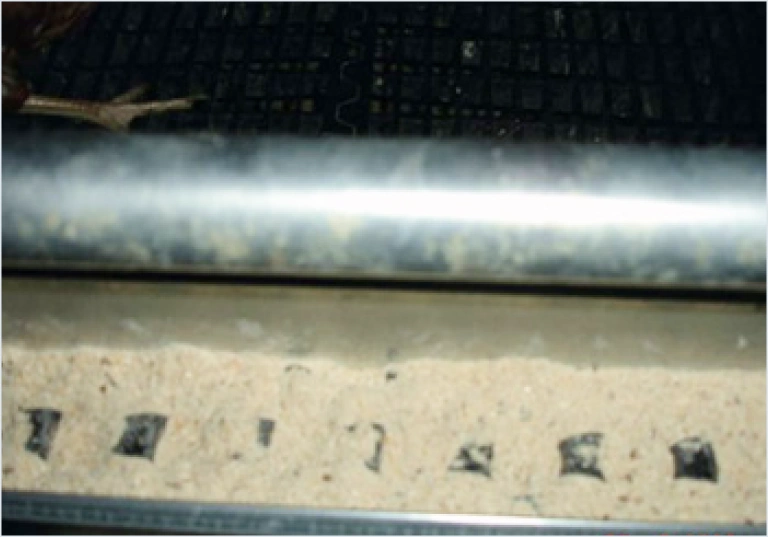
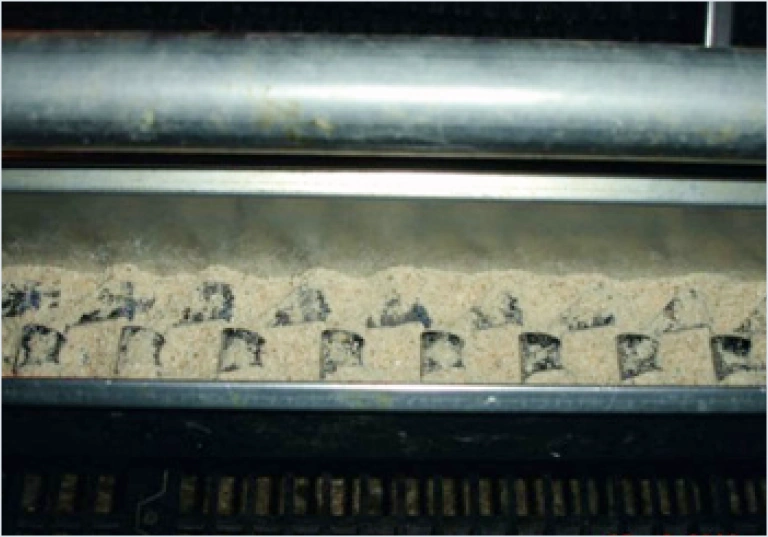
To mirror this behaviour better, feed times should be adapted to get a low level on the feeders for eight hours after switching on the lights. Under normal conditions 2/3 of the daily feed should be supplied in the last eight hours. Ensure this afternoon feed is effectively distributed to the hens.
H&N «Brown Nicks» are not normally prone to put on fat with correctly formulated feeds. Therefore, feed restriction is not recommended. Monitor egg size, body weight and production percentage very closely. These traits will decrease first if birds are being under fed.
Normal level
Low level
Midnight Lighting
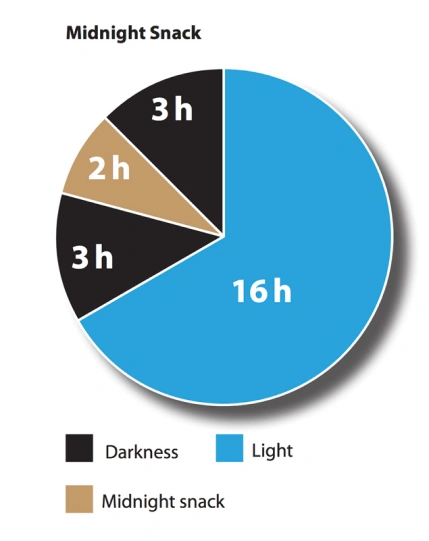
This management technique is used to increase feed intake and allow calcium availability in the hours when the eggshell is formed, and its absorption is increased. It consists of lighting in the dark period to allow hens to feed and refill the crop.
The following guidelines should be followed for correct application:
Switch on the lighting for at least one hour and up to two hours. These hours are in addition to the normal period of light.
Midnight period must be at least (and never less than) three hours after switching off the lighting and at least three hours before the lights switch on.
Feeders must be filled before the lights switch on.
Stress avoidance (noises, direct sun rays, light intensity variation, etc.).
Water must be available.
Midnight lighting can be used with different objectives:
Increase in feed consumption. It can be used in rearing and/or production. It is especially useful in hot climates where birds are unable to feed properly in day time.
Improvement of eggshell quality. The availability of extra calcium in the intestine allows better calcification and reduces bone decalcification.
Laying Process
Laying process
Egg formation is a complex process that occurs in the oviduct of the hen. The whole process takes around 24 hours, but forming the eggshell takes most of the time (18–21 hours). Lay is a critical moment for hens. If possible, they prefer a protected and dark area. The cloaca could be reversed during the lay process which can encourage cannibalism. If hens retain eggs due to stress, shell defects may occur. Therefore, avoid disturbing hens during maximum laying hours to reduce this kind of defect. This means not disturbing them by removing dead birds, feed distribution, inspecting cages.
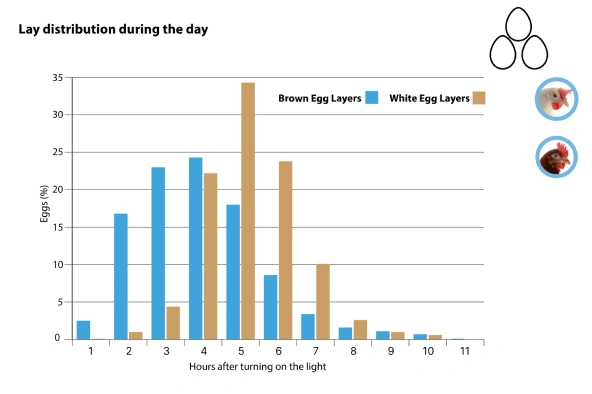
Lay distrution during the day
Laying window
The laying window is defined as the time in hours since the lay of the first egg to the last one. Its range varies between breeds of hens. 50 % of the lay takes place around 4–5 hours after switching on lighting or after the sunset. It is useful to know when most of the eggs have been laid. This information can also be used to advance or delay the time of sunset, although periods of 16 hours of light are used routinely.
Egg Collection
Egg collection impacts the external and internal quality of the produced eggs. It must therefore be performed correctly in order not to degrade the value of the eggs:
Collect eggs as soon as possible. Do not keep eggs in the house but collect them and store them in a cool (max. 18 °C) and dry place.
Collect the eggs twice a day, especially in hot climates.
Correct beak treatment – if permitted in your country.
Avoid overstocked nests or egg belts. This may increase the number of cracked and soiled eggs.