Preparing the breeding flock to move to the laying house
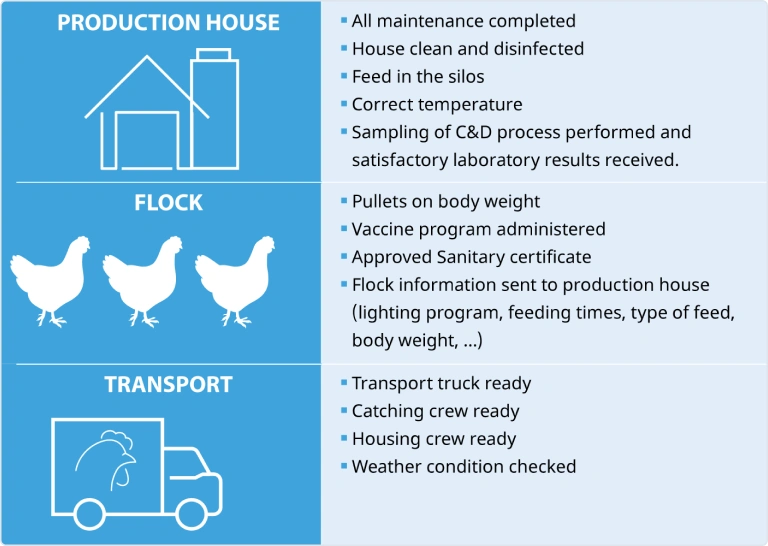
It is recommended that birds are transferred between 15 and 18 weeks of age. The birds should have time to familiarise themselves with the new environment before they start laying.
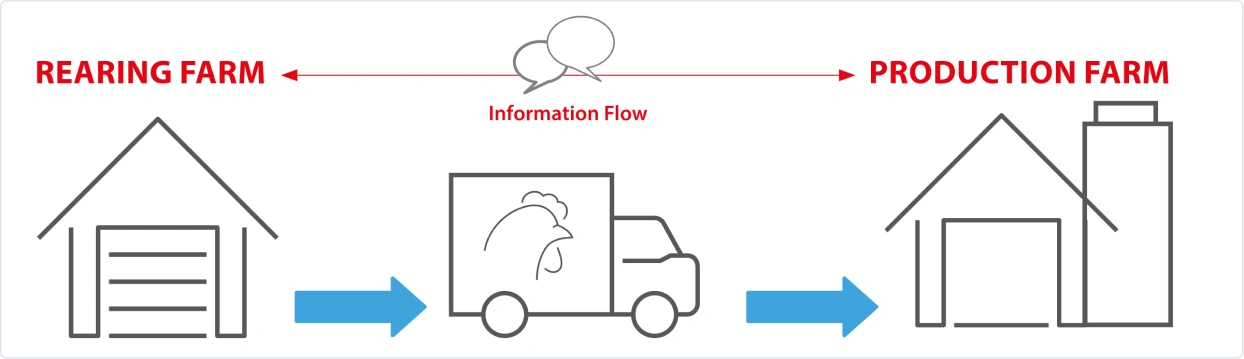
If the feeding and watering systems used in the rearing house and the laying house are similar, this will help the birds to make a smooth transition. The same lighting programme should be used as in the breeding house. Good communication and co-ordination between the rearing house and the laying house is necessary to synchronise the management of the flock.
Stocking density in the egg-laying house
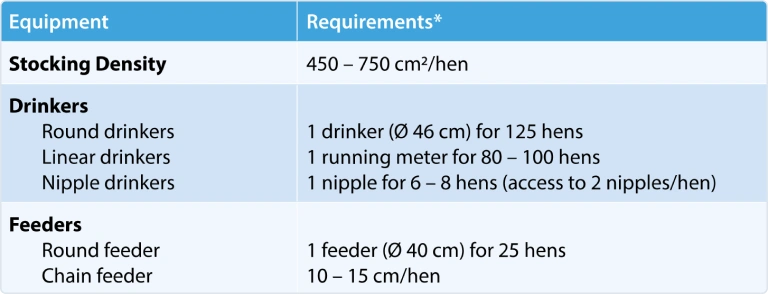
Table 5. Stocking density at production house These recommendations should be adjusted to the local specific regulation
Birds should have enough space, especially in hot climates. It is important to consider not only the cm² of cage floor per bird, but also the height of the cage and the number of cm of feeder and drinker available per bird (a minimum recommendation is given in table 5).
Overpopulation has a significant impact on mortality, body weight, body weight uniformity, plumage condition and, ultimately, the number of eggs laid per hen. In addition, local legislation must be respected.
Transport to the laying house
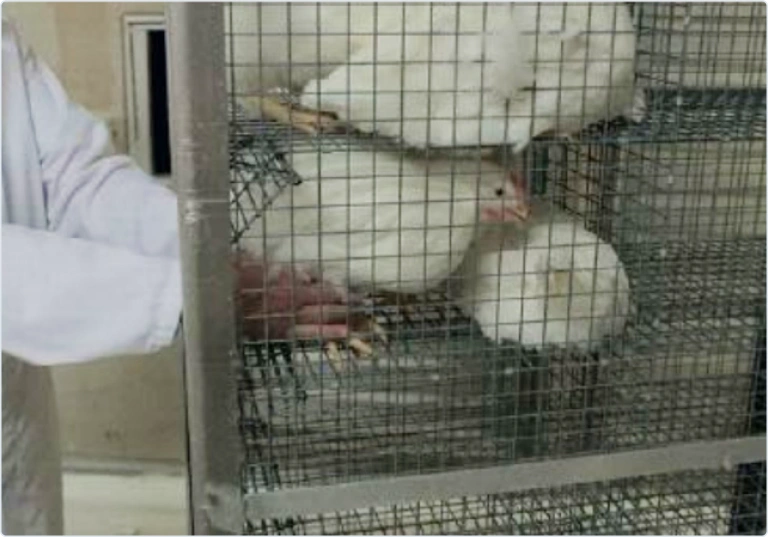
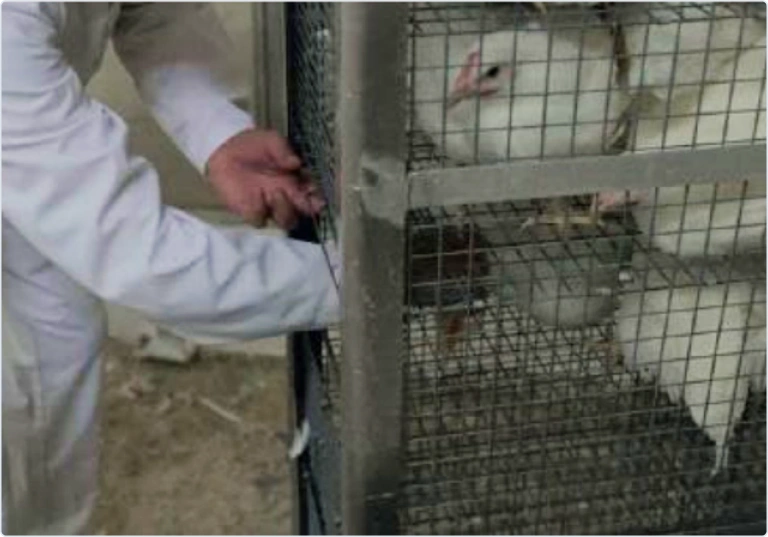
Catching
Low light intensity
Trained staff
Careful bird handling
Gently but quickly
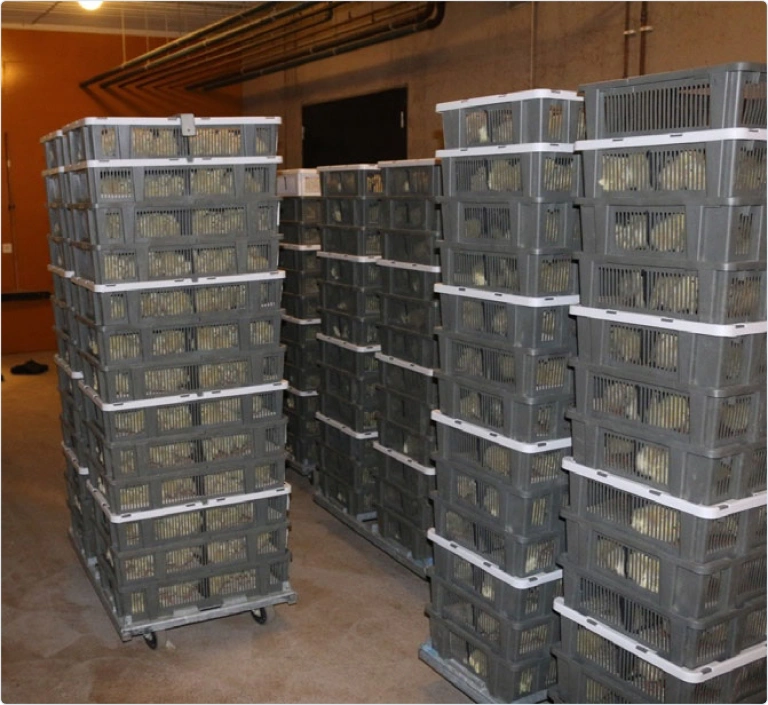
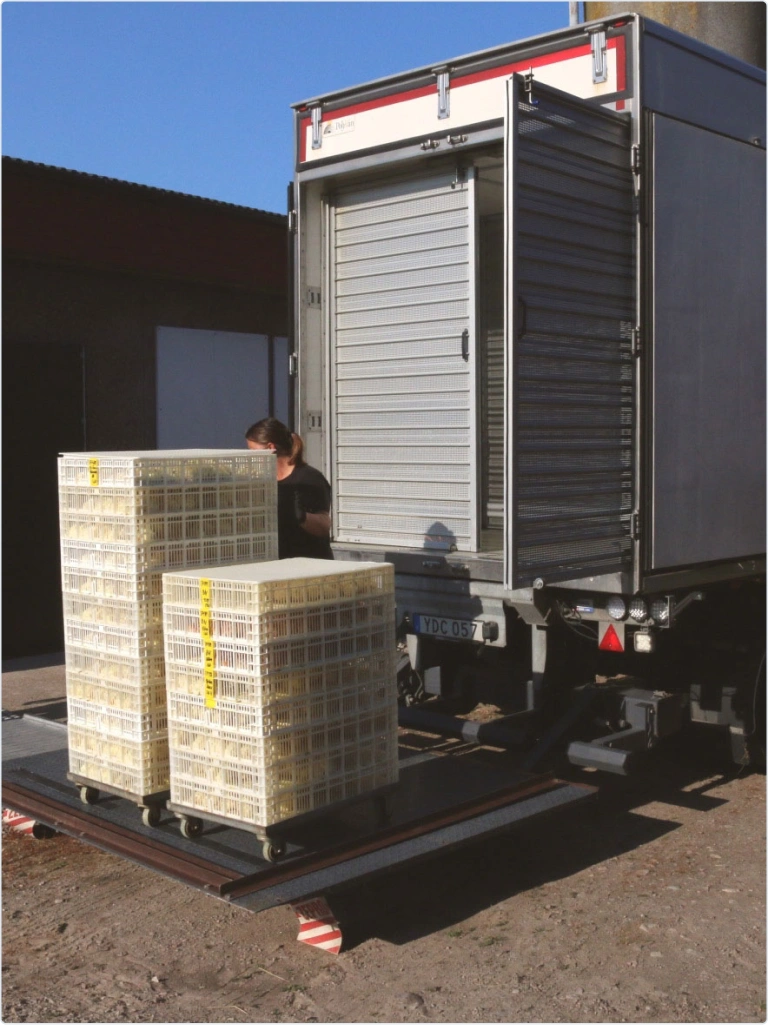
Transport
Skilled Driver
Clean and disinfected transport
Optimum stocking density
Meeting current local regulations
Reception
Clean and disinfected
Equipment tested and working
Water and feed available
24h light first day
Follow regulations
Pre-heating in cold areas
Preparation
Transport must be planned well in advance and all staff involved must be informed. Withhold food for a few hours before loading, but continue to supply fresh water. Transport equipment must be in good condition and thoroughly cleaned and disinfected. Staff handling and moving birds should follow biosecurity regulations, wear clean clothes and shoes that have not been exposed to poultry. Choose the best time of day for transport (especially in hot climates).
Load
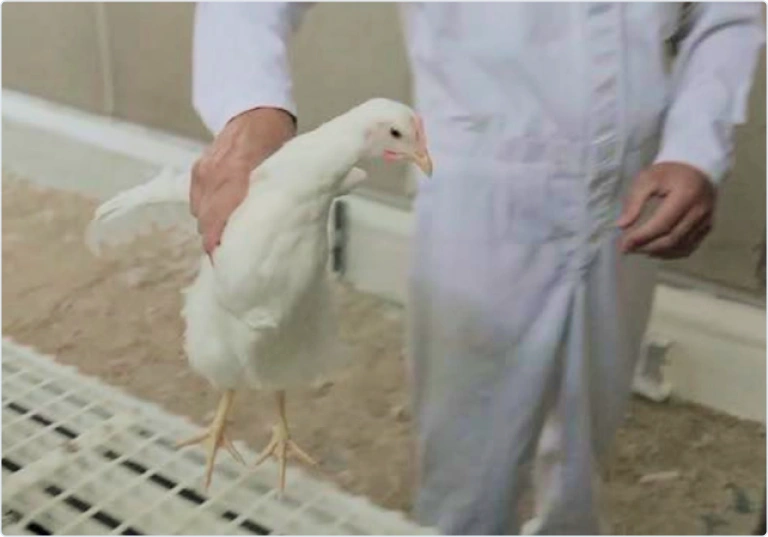
Load quickly but carefully and maintain adequate stocking density in the transport trolleys. Continue to ventilate the house during the procedure. Staff should be well trained and should handle birds in accordance with animal welfare regulations, catching and holding birds by both tarsi. Ensure sufficient ventilation for the birds between loading and unloading.
Transport
Transport time should be as short as possible, avoiding unnecessary stops. Avoid moving birds during the part of the day with extreme temperatures, or when weather conditions could have a negative effect on the birds.
In all cases
Do not grab hens by the wing, leg or neck.
Do not overload the transport trolleys.
Do not leave hens in trolleys in direct sunlight or in unventilated areas.
Do not load trolleys in closed, unventilated trailers.
Hens will lose weight during transport, depending on the time and temperature. This loss will be quickly recouped if they are housed in the right conditions.
When should the birds be moved?
Accommodation in the laying house
An all-in-one system is recommended to break disease cycles and improve health. The laying house should have been thoroughly cleaned and disinfected beforehand. Transfer should be carried out as regularly and as quickly as possible to allow the birds to be well prepared for the start of laying. The temperature in the laying house should be between 18 and 24°C. Fresh water and food should be available when the pullets arrive at the house.
Where possible, use the containers/boxes once a day and/or clean the containers in between. This will prevent infections spreading from the laying house to the rearing house!
Water
Drinkers should be set at the right height and pressure to encourage birds to drink. A lower pressure for the first few days will help. During the first few days, check frequently that the birds are drinking. Adapting to a new drinking system may be difficult (especially if the pullets were raised on a different type of drinker). If water intake does not increase in the days following housing, or if it does not reach normal levels, corrective measures should be taken immediately.
Feeding
Feeders should be filled as soon as the pullets arrive to make it easy for them to find food. Also encourage the birds to eat by running the feed lines more frequently. If the pullets are reluctant to eat after a few days, corrective action should be taken immediately. Continue with the same feeding programme and let them empty the troughs once a day too. Avoid changing the feed presentation between rearing and production.
Lighting
A continuous 24-hour light can be set from day one, so that the birds can familiarise themselves with the new environment. After that, try to continue with the lighting programme that has been established in the rearing house. The light intensity may be a little higher for the first week (20 lux) to encourage the hens to explore the house. Avoid over-stimulating the hens with too much light.
Weight
The weight lost during transport should be recovered during the first few days in the house. The birds should continue to gain body weight and maintain good flock weight uniformity to ensure a good start to production.
Behaviour
Observe the birds’ behaviour carefully and take action if necessary.